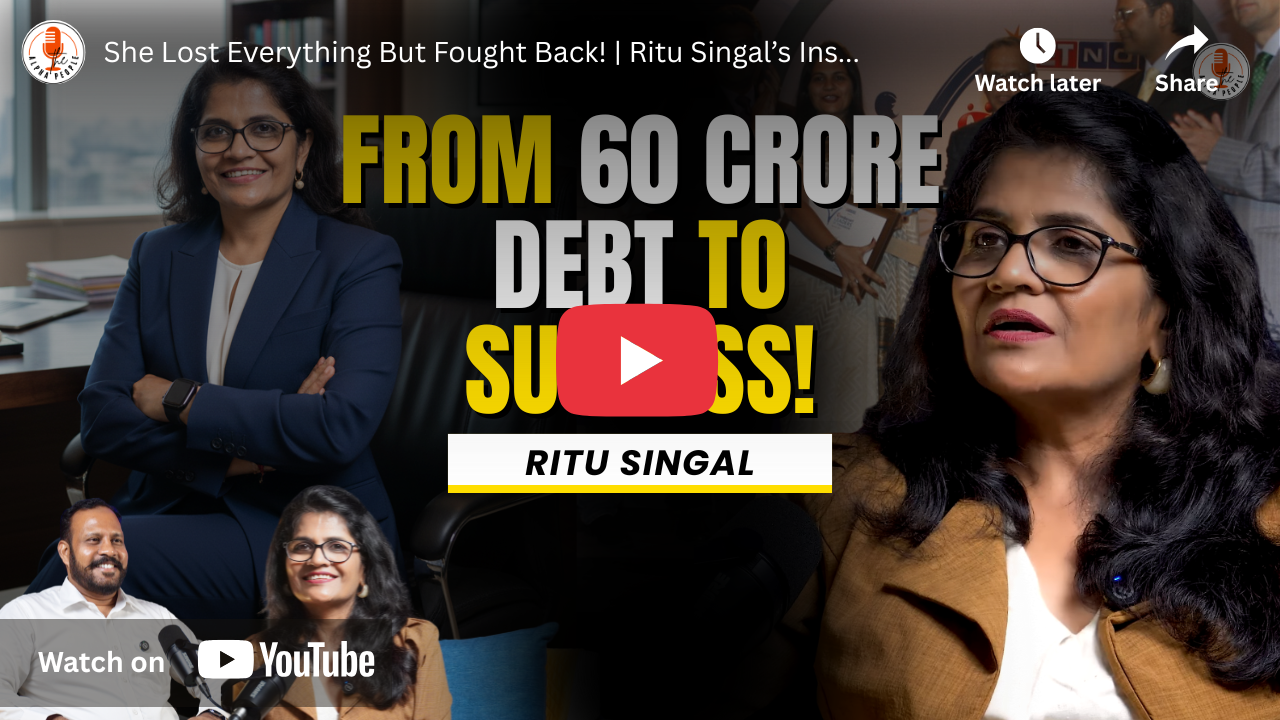
In this powerful episode of The Alpha People Podcast, host Naveen Kumar Verma sits down with Ritu Singal, an extraordinary woman whose life journey redefines resilience, courage, and the power of faith. Once a devoted housewife for 16 years, Ritu’s life took a devastating turn in 2007 when her husband tragically ended his life, leaving behind not only emotional trauma but also a massive business liability — ₹60 crore in loans and numerous legal cases. What followed was a journey of grit, transformation, and sheer willpower as Ritu rose from the ashes to become one of India’s most inspiring entrepreneurs and life coaches.
Ritu opens up about the darkest phase of her life — the chaos, disbelief, and the heavy sense of responsibility that fell on her shoulders overnight. She had no prior experience in business, coming from a service-class family and suddenly finding herself at the helm of a struggling enterprise. But instead of breaking down, she made a choice: to fight back. Guided by her spiritual foundation and a deep belief in Buddhism, Ritu decided not to surrender to her circumstances. She rebuilt her company, fought through courts, cleared debts, revived operations, and eventually emerged as a National Women Entrepreneur of the Year, proving that real strength is born from adversity.
Throughout the conversation, Ritu shares the mindset that kept her going — a combination of focus, gratitude, and planning. She explains how her success wasn’t accidental but rooted in discipline. From maintaining detailed task lists and prioritizing quality time with her children to cultivating mental clarity through meditation and gratitude journaling, Ritu emphasizes that “being focused in the present” is the foundation of real success. Her life lessons on overcoming impostor syndrome, not comparing oneself with others, and learning from everyone around you reflect her grounded yet growth-oriented philosophy.
As a single mother and businesswoman, she managed to balance her professional and personal responsibilities with what she calls the “Three Bs” of her life — Business, Bachche (children), and Buddhism. Her story of spiritual strength and resilience is nothing short of awe-inspiring. She narrates how her Buddhist practice gave her courage when she felt lost, and how gratitude journaling helped her see hope even in the toughest moments — like after the factory fires that destroyed parts of her business but not her spirit. To her, every setback became a lesson in patience and acceptance, a chance to “rebuild with a better design.”
The podcast also delves into the challenges of being a woman leader in a male-dominated industry. Ritu recalls how government officers and employees initially underestimated her capabilities, refusing even to make eye contact in meetings. Yet, through consistent learning, hard work, and informed decision-making, she earned respect and authority. Her message to women everywhere is clear — knowledge and perseverance are the true sources of power, not gender or privilege. She narrates touching incidents of gaining her team’s trust, handling legal threats, and even facing government scrutiny — all through honesty, logic, and grace.
Beyond business, Ritu has become a beacon of hope for people battling hopelessness and suicidal thoughts. She shares how her books — “I Decided Not to Cry” and “A Story Can Change Your Life” — have touched thousands by proving that it’s possible to rise again no matter how deep one falls. Her coaching sessions and talks have helped many rediscover purpose, reminding them that “the universe is always writing a parallel story” — we just need faith to see it unfold. Her approach combines storytelling, spiritual insight, and practical guidance to help others transform pain into power.
As the podcast concludes, Ritu leaves listeners with profound life lessons — to accept life’s impermanence, embrace both suffering and joy, and keep moving forward with gratitude. She reminds us that life is unpredictable, but courage and compassion can turn any tragedy into triumph. Her journey from a grieving widow with crushing debts to a respected industrialist and life coach stands as a living testament to the human spirit’s ability to rebuild, reinvent, and rise again.
🔔 Don’t forget to subscribe & share if this conversation resonated with you!
🔔 Don’t forget to subscribe & share if this conversation resonated with you!
Frequently Asked Questions
Certainly! Here are some potential questions and answers based on the podcast conversation:
I didn’t have time to think whether I was strong or not. Life gave me two options — give up or fight back. I chose to fight. When we stop asking “Why me?” and start asking “What next?”, that’s where healing begins. One step at a time, I rebuilt everything — not because I knew how, but because I refused to stop.