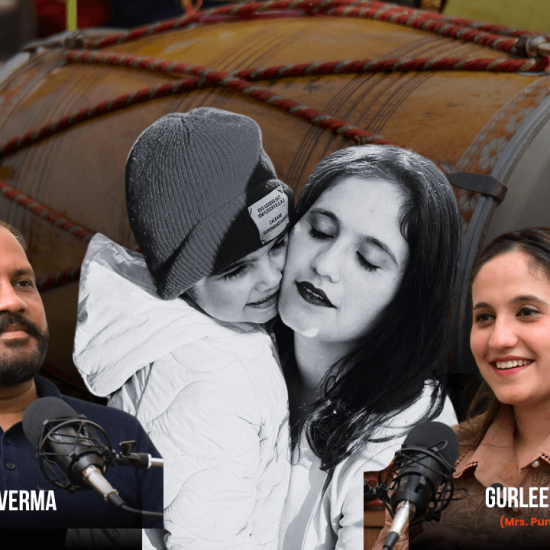
In this powerful episode of The Alpha People Podcast, host Naveen Kumar Verma sits down with IPS Dr. Veerendra Mishra, one of India’s most respected officers and a leading expert on human trafficking and social justice. What unfolds is not just an interview — it’s a masterclass on understanding one of the world’s darkest organized crimes. From his years of experience on the ground to his work at the policy level, Dr. Mishra takes listeners through the unseen dimensions of human trafficking, breaking down myths and exposing how deeply this crime is woven into the fabric of modern society.
The conversation begins with Dr. Mishra’s inspiring personal journey — a story of resilience, purpose, and transformation. From his early days in Punjab to joining the Indian Police Service, he shares how life’s unexpected turns pushed him toward public service. His experiences in Bosnia and Kosovo under UN missions opened his eyes to global trafficking networks, shaping his understanding that human trafficking is not limited by borders, culture, or class. What makes his narrative deeply human is his belief that policing must go beyond enforcement; it must be rooted in empathy and understanding of the vulnerabilities that create victims in the first place.
As the discussion deepens, Dr. Mishra deconstructs the very definition of human trafficking, explaining it not as mere kidnapping or abduction but as the “exploitation of vulnerability.” He describes how traffickers operate through sophisticated networks — scouting victims who are emotionally, socially, or economically fragile. Whether through promises of employment, false love, or digital manipulation, traffickers prey on human weakness. He introduces the concept of “faceless trafficking,” where victims are lured online and exploited without ever meeting their traffickers in person. From organ trade and surrogacy rackets to clinical drug trials and forced labour, he paints a chilling yet factual picture of the multiple forms this crime takes.
Dr. Mishra’s stories bring the issue uncomfortably close to home. He recalls cases of women forced into surrogacy, children sold for labour, and individuals deceived into organ trade — all under the illusion of opportunity. His explanation of the “Golden 48 Hours” — the critical window to trace missing persons before they fall into traffickers’ hands — highlights the urgency of awareness and swift action. He also discusses the dangers of social media vulnerability, where sharing personal struggles publicly can expose individuals to predatory eyes.
However, amid the darkness, Dr. Mishra offers a way forward. He believes that the solution to trafficking doesn’t lie solely in criminal justice but in social justice. Through initiatives like RACE Lab (Research, Advocacy & Capacity Building Against Exploitation), he and his team work to conduct nationwide research, train law enforcement, and influence policies that address the root causes of vulnerability — poverty, inequality, and lack of education. He also shares his work with Samvedna NGO, where he helps children from the Bedia community in Madhya Pradesh escape intergenerational exploitation through education and empowerment.
The episode closes on a note of hope and responsibility. Dr. Mishra urges listeners to rebuild community connections — to look out for neighbours, question unusual recruitment offers, and maintain awareness about their children’s digital footprints. His message is simple but profound: trafficking thrives in silence, and awareness is its biggest enemy. Through this episode, The Alpha People Podcast not only sheds light on a hidden crime but also reminds every listener that change begins with awareness, empathy, and collective action.
🔔 Don’t forget to subscribe & share if this conversation resonated with you!
🔔 Don’t forget to subscribe & share if this conversation resonated with you!
Frequently Asked Questions
Certainly! Here are some potential questions and answers based on the podcast conversation:
Human trafficking is not only about kidnapping or selling people. It is the exploitation of vulnerability. When someone recruits, transports, or receives another person by using force, fraud, deception, or threat — and then exploits them — that is human trafficking.