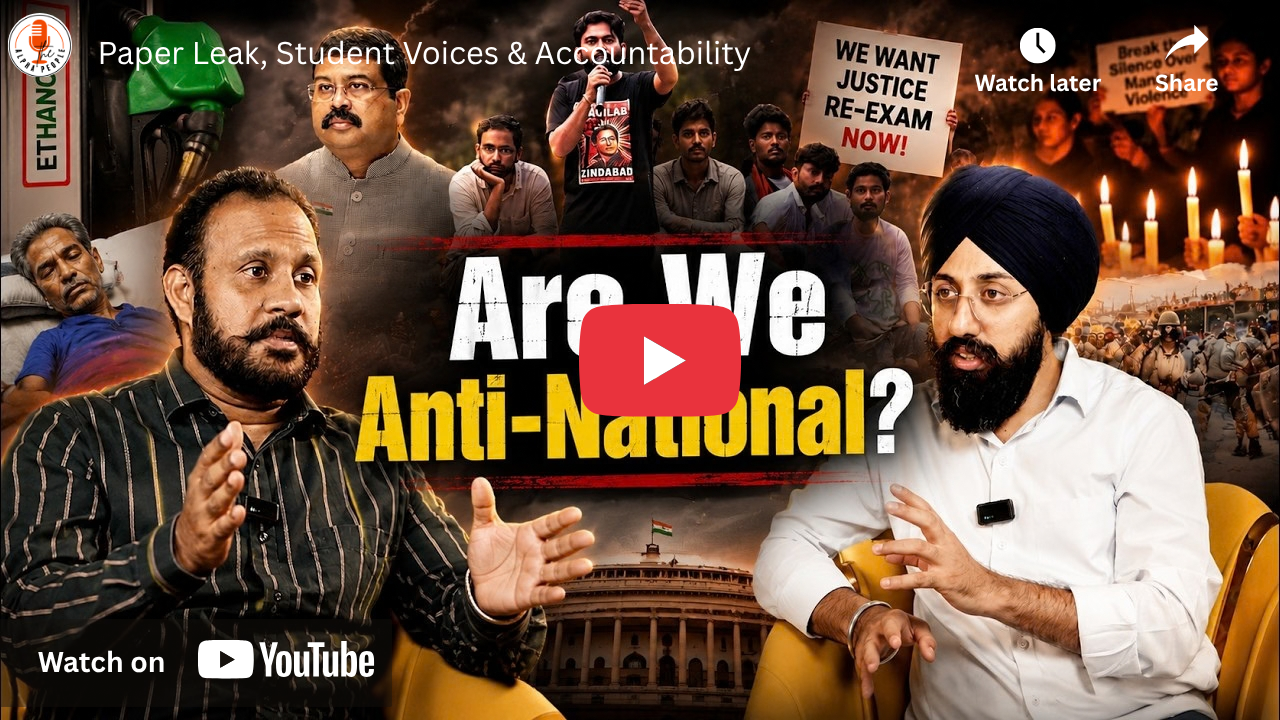
The podcast delves into the systemic crises plaguing India’s national examination framework, highlighting how recurring paper leaks and administrative oversights in major competitive tests like NEET, NET, and state recruitment exams have severely disrupted student lives. The conversation outlines how years of dedicated preparation by lakhs of aspirants are undermined within hours when question papers are compromised for financial gain. The discussion underscores the profound psychological toll this uncertainty takes on youth, directly linking the administrative failures to rising anxiety and tragic student suicides across coaching hubs and university centers.
Beyond the immediate panic caused by leaks, the dialogue examines the broader economic burdens placed on middle-class and economically vulnerable families. Parents frequently take high-interest loans, sell land, or exhaust life savings to pay for expensive coaching institutes, private housing, and registration fees in hopes of securing a stable government or medical career for their children. When exams are cancelled or delayed indefinitely, these financial sacrifices yield no return, compounding family debt and forcing students into prolonged socio-economic distress.
A primary theme explored throughout the discussion is institutional accountability and the role of oversight bodies like the National Testing Agency (NTA). The podcast critiques the lack of stringent security protocols, delayed investigations, and the absence of immediate structural reforms following paper leak allegations. The guest emphasizes that sporadic arrests of low-level fixers or exam centers do not address the deeper corruption within examination logistics, distribution networks, and official oversight boards, leaving systemic vulnerabilities intact for subsequent exam cycles.
The conversation further addresses the government’s response to peaceful youth demonstrations and student protests. It highlights the disparity between public promises of educational reform and the ground reality faced by student protestors, who frequently encounter police lathicharges, detentions, and media suppression when demanding fair re-examinations or political resignations. The discussion argues that treating legitimate student grievances as law-and-order issues rather than academic emergencies further alienates young citizens from state institutions.
Finally, the podcast explores democratic solutions and youth mobilization as essential pathways to systemic reform. The dialogue emphasizes the necessity of non-partisan platforms, transparent exam processes, independent auditing mechanisms, and legally binding accountability measures for testing bodies. By transforming student disillusionment into structured public awareness and peaceful civic advocacy, the conversation asserts that real change requires holding authorities accountable through active democratic engagement, transparent reporting, and sustained institutional pressure.
🔔 Don’t forget to subscribe & share if this conversation resonated with you!
Frequently Asked Questions
Certainly! Here are some potential questions and answers based on the podcast conversation:
The main factors include inadequate supply-chain security during question paper distribution, corrupt third-party vendors managing digital and physical logistics, insufficient oversight by testing agencies, and the high-stakes financial market created by commercial coaching centers.
Paper leaks inflict severe psychological distress, causing prolonged anxiety, depression, loss of academic trust, and existential panic among students who spend years preparing under high pressure, occasionally leading to tragic student suicides.
Families often face devastating financial strain, having invested significant sums in coaching tuition, study material, travel, and boarding costs, frequently funded through high-interest personal loans or liquidated family assets that yield no return when exams are voided.
Actions often focus on superficial enforcement—such as arresting local exam center supervisors or low-level intermediaries—while failing to prosecute high-level syndicates, audit testing agency personnel, or overhaul systemic logistical flaws.
The testing agency faces scrutiny for centralized administration vulnerabilities, delayed responses to candidate red flags, lack of transparency in grace-mark allocations, and an overall reliance on outsourced private infrastructure without adequate auditing.
Demonstrators often encounter state resistance, including police lathicharges, temporary detentions, venue restrictions, and efforts to portray student-led grievances as politically motivated law-and-order disruptions.
Escalating prices for fuel, transport, cooking gas, and daily essentials increase the baseline cost of living in educational hubs, compounding the economic pressure on students and families surviving on tight budgets during extended preparation timelines.
Non-partisan youth platforms allow students to unite around shared systemic issues—such as exam integrity and employment opportunities—without being divided by traditional party politics, generating public pressure for institutional transparency.
Reforms must include strict legislative penal frameworks for paper leaks, independent oversight committees, encrypted digital distribution models, robust auditing of testing vendors, and timely dispute-redressal mechanisms for affected students.
Aspirants are encouraged to channel their frustrations into constructive civic participation, maintain collective solidarity, demand institutional accountability through legal and peaceful means, and prioritize their mental well-being above academic pressures.