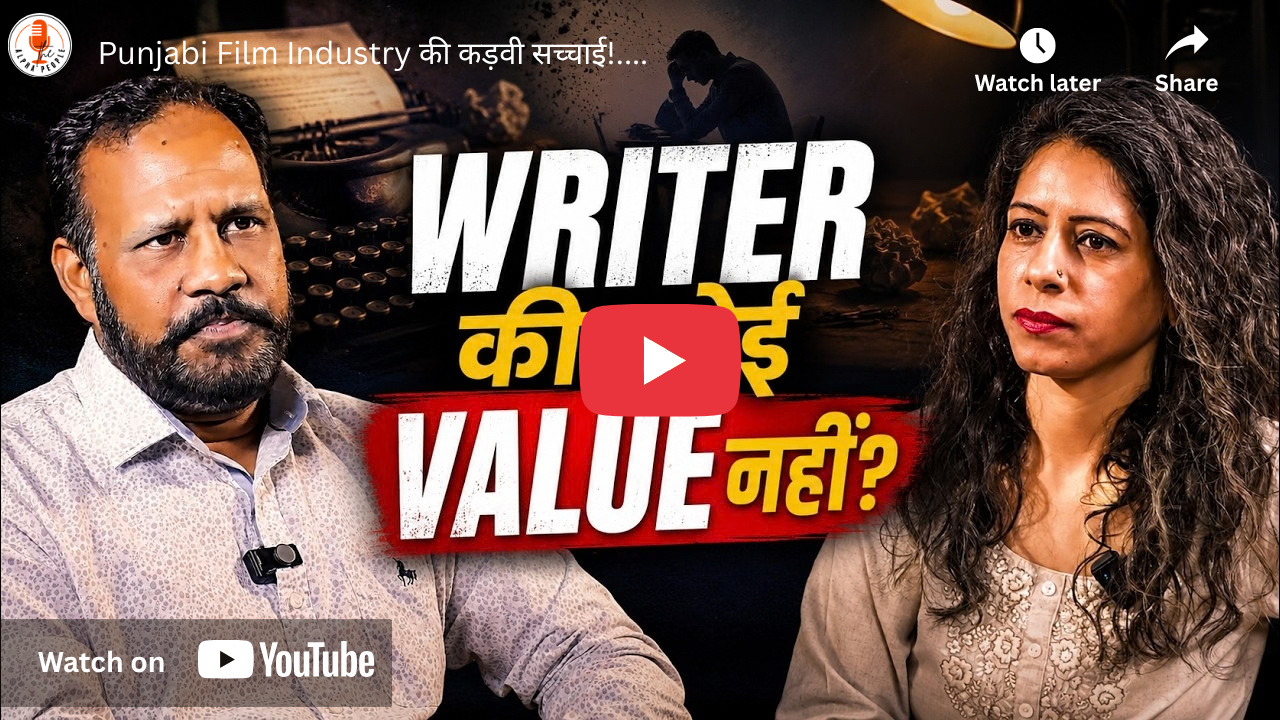
In this in-depth conversation, screenwriter Anjali Khurana pulls back the curtain on the Punjabi film industry, exposing the vast divide between its cheerful, high-energy exterior and its internal creative stagnation. She explains that while cinema from the outside seems driven by harmless comedy and celebration, the system within desperately requires modernization and structural reform. However, industry gatekeepers and established power players who enjoy steady financial returns remain resistant to admitting flaws or introducing meaningful change.
A central focus of the discussion is the chronic marginalization and under-recognition of screenwriters. Khurana highlights that despite writers being the intellectual architects behind successful stories, characters, and dialogues, the spotlight and commercial accolades are almost exclusively hoarded by lead stars, directors, and promotional machinery. She notes with regret that many writers have resigned themselves to this hierarchy, accepting that their creative contributions will be largely overlooked by audiences, media, and PR teams.
The podcast highlights the creative compromises that occur throughout production, where original writing is frequently altered on set on a whim. Khurana shares that screenwriters often experience the jarring reality of watching their films in a cinema only to discover unexpected dialogue rewrites and modified scenes that depart completely from the original vision. Rather than investing in data-driven audience research, deep character arcs, or layered storytelling, productions often prioritize informal personal rapport, convenience, and hasty shooting decisions.
She also addresses the industry’s formulaic casting trends, criticizing the tendency to build feature films primarily around popular singers rather than trained actors. This practice relies on casting decisions framed by the rationale that acting can be managed later as long as a commercially bankable singer is attached, which in turn leads to repetitive plots, identical tropes, and generic films that blend into one another. Furthermore, she notes that major OTT platforms remain risk-averse, predominantly opening their doors to established names rather than championing fresh, boundary-pushing scripts.
Addressing the legal and ethical vulnerabilities creators face, Khurana dives into the rampant problem of script and concept theft across the filmmaking pipeline. Because screenwriters must pitch their work to multiple producers and stakeholders to secure funding, unprotected or even formally registered concepts frequently get appropriated without proper compensation or attribution. She explains that unless a writer belongs to the elite few with enough industry leverage to resolve disputes quietly, fighting plagiarism requires raising public awareness, engaging writers’ associations, seeking legal injunctions, and taking battles directly to the court of public opinion.
🔔 Don’t forget to subscribe & share if this conversation resonated with you!
Frequently Asked Questions
Certainly! Here are some potential questions and answers based on the podcast conversation:
No. While it is marketed to the audience as non-stop comedy and festive celebration, the internal reality is quite different. The industry urgently requires structural and creative improvements, but the key decision-makers resist acknowledging the need for change because their own projects continue to make a steady profit.
Punjabi films often feel identical because projects are rarely backed by market research, script depth, or fresh storytelling concepts. Instead, films are greenlit based on personal comfort zones, immediate availability, and existing relationships rather than the merit of an original screenplay.
The commercial hierarchy heavily favors popular singers over trained actors. Production teams frequently operate under the mindset that as long as a commercially bankable singer is attached to the project, the acting can simply be managed or coached on set later.
The promotional machinery—including PR agencies, media publications, and talk shows—is built entirely around turning lead actors and singers into stars. These platforms rarely acknowledge the writer who spent months conceiving and drafting the story, leaving audiences with the impression that on-screen stars created the work themselves.
Over time, many screenwriters develop a sense of resignation. Because the systemic sidelining of writers has been normalized for years, creators often accept it as an unwritten industry rule, coming to terms with the reality that credit arrives late—or not at all.
Scripts frequently undergo arbitrary revisions during production. Directors or lead actors often decide on a whim that a scene does not feel right, demanding immediate unscripted changes or rewrites without respecting the integrity of the original screenplay.
It can be deeply disheartening. Writers often sit in the cinema only to be blindsided by altered dialogues, modified sequences, or tonal shifts that completely diverge from what was originally written on the page.
No. While countless creators pitch stories to major streaming platforms, OTT executives remain risk-averse. They predominantly greenlight projects brought forward by established names and familiar faces rather than taking chances on fresh, independent writing.
To get a film financed, a writer has to pitch their script to dozens of producers and stakeholders. During these meetings, someone may latch onto a core premise or a single compelling line and commission another writer to build upon it cheaply, bypassing the original creator altogether.
While prominent industry figures can resolve intellectual property disputes quietly using their leverage, newer writers must fight publicly. A writer must approach their screenwriters' association, seek a court-ordered stay against the unauthorized production, and take the issue to social media and news outlets to build public pressure.