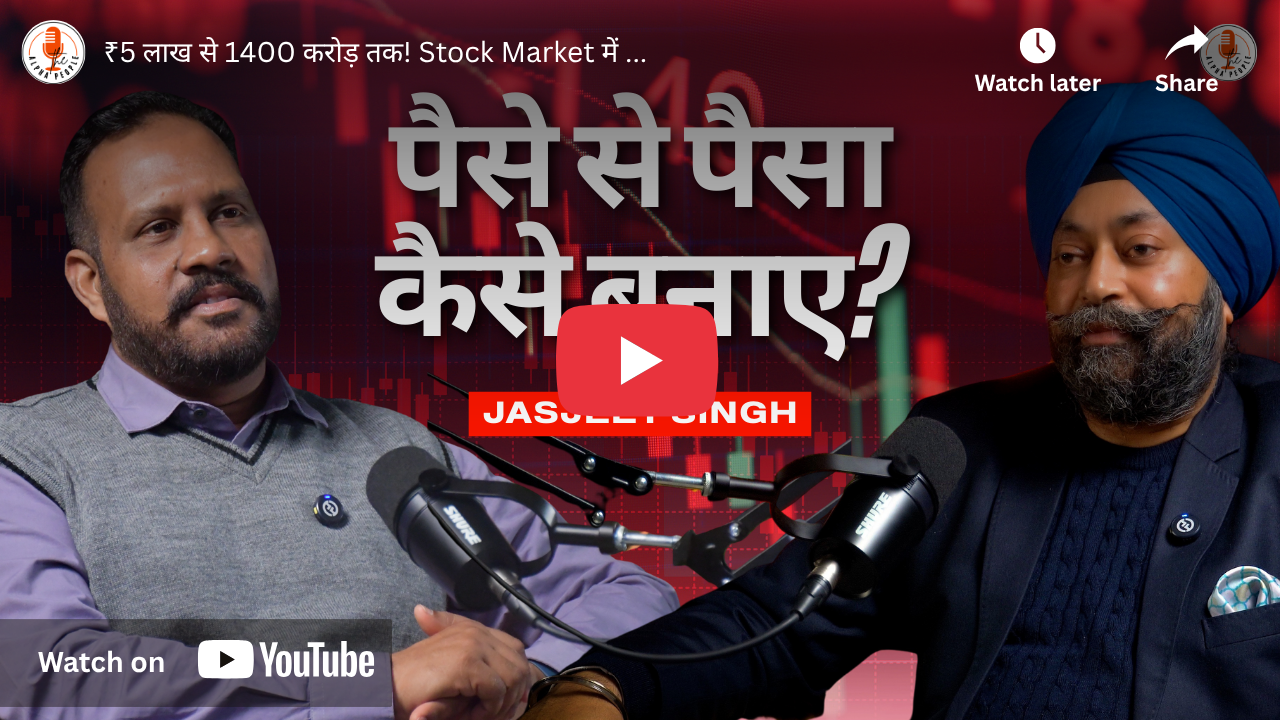
The podcast begins by demystifying the world of stock broking and wealth management. Jasjit Singh emphasizes that while many view the stock market as a quick money-making machine, it is actually a professional domain requiring SEBI-registered guidance. He clarifies that brokers facilitate trades, but real wealth is built through the advice of Registered Investment Advisors (RIAs) who focus on long-term strategy rather than short-term gambles.
A major theme of the discussion is the myth of guaranteed returns. Jasjit highlights that “guarantee” is a word that doesn’t exist in a volatile market. Instead of looking for certainty, investors should focus on identifying high-growth sectors like infrastructure, defense, and solar energy, which are currently backed by government policies. He stresses that without research, investing is merely a lottery, but with a minimum 3 to 5-year horizon, the chances of growth increase significantly.
For the common man and young professionals, the advice is simple: keep it basic and prioritize knowledge. Jasjit suggests that even 30 minutes of research a month can yield great results. He introduces the concept of asset allocation based on age—younger investors should lean towards equity for higher growth, while those nearing retirement should prioritize capital protection through fixed-income assets like bonds and FDs.
The conversation delves into the SIP vs. Lumpsum debate. The expert explains that Systematic Investment Plans (SIPs) are ideal for salaried individuals to build wealth over time, while lumpsum investments should be reserved for market dips when extra capital is available. A “smart investor” balances both. He also touches on the importance of investing in oneself—upskilling in areas like AI—to create passive income streams that can then be funneled into the market.
Addressing traditional vs. modern investments, Jasjit acknowledges North India’s preference for real estate and gold. While diversifying into these physical assets is good, he advocates for the liquidity of mutual funds and ETFs. He shares a touching story of a client whose small ₹2000 monthly investment eventually funded his daughter’s grand wedding, proving that consistency and patience are the ultimate keys to financial freedom.
Finally, the podcast explores the impact of technology and AI on trading. While Algo-trading and AI tools provide a “sharper edge,” they cannot replace human judgment and basic market knowledge. Jasjit concludes by urging families to involve women and youth in financial decisions to ensure long-term legacy protection, emphasizing that the stock market is not a “rich man’s club” but a tool accessible to anyone starting with as little as ₹500.
🔔 Don’t forget to subscribe & share if this conversation resonated with you!
Frequently Asked Questions
Certainly! Here are some potential questions and answers based on the podcast conversation:
A stock broker facilitates the buying and selling of shares and commodities, while a SEBI-registered Investment Advisor (RIA) provides the actual guidance and strategy on which stocks to pick for your portfolio.
No. There is no such thing as a "guarantee" in stock broking. The market is subject to global volatility and events, but strategic knowledge and a long-term view help minimize risk.
Sectors heavily pushed by government policies, such as Infrastructure, Defense, and Solar Energy, are currently identified as high-growth areas for the coming years.
Ideally, someone in their 30s should aim to invest between 30% to 50% of their income, taking advantage of their age to absorb market volatility through equity investments.
Both have their place. SIP is best for consistent wealth building from regular income, while Lumpsum is effective for capitalizing on market "dips" when you have surplus cash.
Long-term capital gains (LTCG) on stocks are generally taxed at 12.5%, which is often much lower than the 30% tax slab many business owners face on their direct professional income.
Yes. The stock market is not just for the wealthy. You can start investing in gold or Nifty-linked funds with as little as ₹125 to ₹500 per week or month.
The three main pitfalls to avoid are Greed, Lack of Emotional Control (Panic), and Lack of Deep Pockets (not having spare margin/liquidity).
AI has introduced Algo-trading, which helps in decision-making and executing trades faster. However, AI is a tool, not a replacement for basic market understanding and expert guidance.
Women are often more disciplined and consistent with investments. Involving them ensures that the family's financial legacy is secure and managed effectively even in the absence of the primary earner.