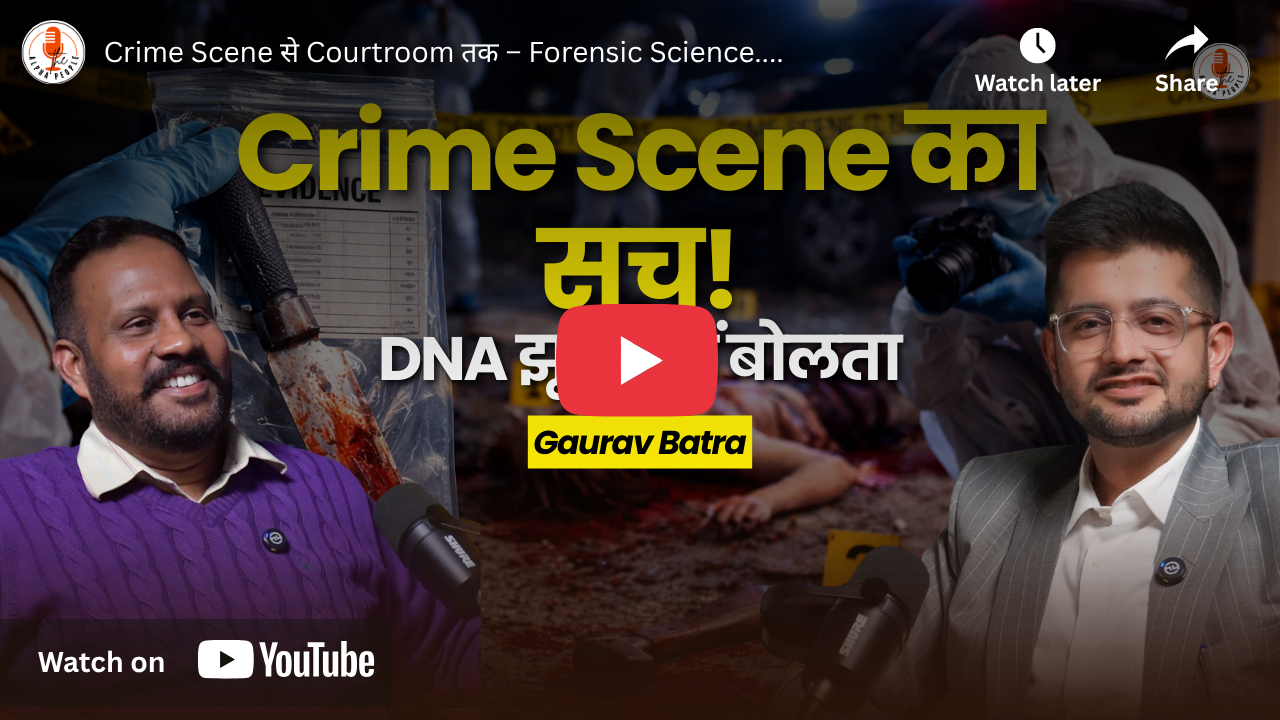
In this gripping episode, Gaurav Batra demystifies the reality of forensic science, contrasting the dramatized versions seen in shows like CID with the meticulous, protocol-driven reality of modern investigations. He emphasizes that a forensic expert’s role begins the moment a crime occurs, starting with the vital task of securing the crime scene to protect fragile evidence like fingerprints, DNA, and footprints from contamination.
The discussion highlights the diversity of forensic specializations, from biological experts tracking DNA and hair samples to chemical experts who can detect unusual methods like using chemicals to melt locks. Batra shares chilling real-life cases, including a complex murder mystery staged as a suicide, where a tiny hair found near a victim’s foot and a mismatch in a suicide note’s handwriting eventually led to the conviction of the real culprits.
Batra also delves into the technicalities of post-mortem examinations, explaining how patterns of “rigor mortis” and burning can reveal whether a body was moved or if a crime was manufactured. He provides insights into how modern technology, such as high-resolution photography and advanced DNA database matching, is revolutionizing the way cold cases—some even decades old—are being reopened and solved.
A significant portion of the podcast is dedicated to the rising trend of document and cyber fraud. Batra warns that as forensic science advances, so do criminals. He details how signature forgery and fabricated documents are among the most common cases in courts today, requiring experts to use microscopic analysis to detect tracing and ink manipulation.
Beyond the technical, the podcast touches on the psychological and emotional toll of the job. Batra reflects on his first experience witnessing a post-mortem and the “instinct” developed over a decade that helps him sense when a scene has been tampered with. He advocates for better awareness and patience in society to curb the increasing crime rates seen in cities like Chandigarh.
Concluding with career advice, Batra outlines the educational path for aspiring forensic scientists, emphasizing that while a solid background in chemistry or biology is essential, hands-on training is the ultimate key. His message is clear: forensic science isn’t just about solving crimes; it’s about providing justice for the victims and serving as a shield for society.
🔔 Don’t forget to subscribe & share if this conversation resonated with you!
Frequently Asked Questions
Certainly! Here are some potential questions and answers based on the podcast conversation:
While shows like CID provide a basic idea, real forensics is much more detailed. It involves strict protocols for securing scenes and lengthy lab processes, rather than the instant results often shown on television.
The primary step is securing the perimeter. Protecting the area from being spoiled by the public or even police officers is crucial to ensure evidence like fingerprints and footprints remain intact.
Yes, both complainants and the accused have the right to hire private forensic agencies to conduct parallel investigations if they suspect negligence or human error in the official report.
DNA is highly resilient and can be extracted from hair, teeth, or bone even after many years. Modern databases allow experts to link old samples to new crimes, as seen in recent multi-year serial offender cases.
Experts look at rigor mortis (stiffening of the body) and blood deposition. If a body's stiffening pattern doesn't match its position at the scene, it’s a clear sign the crime scene was manufactured.
Yes, through meticulous examination. For instance, in hanging cases, the pattern of "ligature marks" on the neck differs significantly if a person was killed first and then hung, compared to a self-inflicted act.
Experts use signature examination to find "tracing marks," carbon residues, or unnatural pauses in handwriting that indicate a signature was drawn rather than written naturally.
Skeletal examination of the jaw, teeth, and pelvic structure can define the person’s gender and approximate age. DNA from the teeth or bone marrow can then be used for a 100% accurate identification.
Acquittals can happen if the evidence isn't "linked" properly to the accused in court. Scientific evidence must be presented clearly and without bias to prove the suspect's involvement beyond a reasonable doubt.
A science background (Chemistry, Biology, or Physics) is required, followed by a Master’s in Forensic Science and Criminology. However, extensive hands-on training is essential to handle real-world evidence.